Do You Need Mold Testing If You See Mold in Your Boca Raton Home?
If you can already see mold, you usually don't need a test to confirm it. The EPA says sampling is unnecessary in most cases when mold growth is visible. What matters more is finding and fixing the moisture that caused it, and removing the mold safely. Testing can still be useful in specific situations, such as hidden mold or confirming a cleanup was successful.
Do you need testing if you can see mold?
In most cases, no. According to the U.S. EPA, "In most cases, if visible mold growth is present, sampling is unnecessary." There are no federal limits for mold or mold spores, so a lab result usually doesn't change what needs to happen next: the mold has to be removed and the moisture problem has to be fixed.
The CDC takes a similar approach. It recommends removing mold regardless of the type and does not recommend routine sampling to identify the species. So if you see black spots on a bathroom ceiling or behind a washing machine, knowing whether it's "black mold" won't change how it should be cleaned up.
What about "black mold"?
Many molds look dark green or black. Color alone doesn't tell you the species, and every type of mold growth indoors should be addressed the same way: find the moisture, fix it, and remove the growth properly.
When a professional mold assessment may make sense
Testing and assessment do have a place. A professional assessment may be appropriate when:
- You smell mold but can't find it. A persistent musty smell in a closet, a room, or when the AC turns on can point to growth inside walls, under cabinets, or in the air handler.
- There was a water event and you want to understand how far moisture and growth may have spread.
- You're buying, selling, or renting and need documentation.
- A remediation is complete and you want independent confirmation that the area was cleaned properly. The EPA notes that surface sampling can help evaluate whether cleanup was adequate.
- Health concerns are involved. Talk with your doctor about symptoms; a property assessment doesn't replace medical advice.
The EPA also notes that sampling should be done by professionals with experience designing mold sampling protocols and interpreting the results.
Assessment, testing, and remediation are different jobs
These terms are often used interchangeably, but they mean different things:
- Mold assessment is an inspection to find where mold is, how much there is, and what is causing it. It may include sampling and usually results in a written report or remediation plan.
- Mold testing (sampling) is the collection of air or surface samples for a lab. It's one tool an assessor may use, not a requirement for every job.
- Mold remediation is the physical work of containing the area, removing contaminated materials, cleaning, and drying so mold doesn't return.
How Florida regulates mold work
In Florida, mold assessment and mold remediation are separately licensed through the Department of Business and Professional Regulation (DBPR). State law generally prohibits the same assessor or company from remediating a structure it assessed within the previous 12 months, and the reverse applies to remediators. This separation helps keep assessments independent.
BO Property Services holds a Florida Mold Remediator license (License #MRSR4018), and our technicians are IICRC AMRT certified (Applied Microbial Remediation Technician). When an independent mold assessment is appropriate for your situation, it should be performed by a separately licensed mold assessor.
South Florida humidity and air conditioning
Boca Raton's climate gives mold plenty of opportunity. Outdoor humidity is high much of the year, and homes depend on air conditioning to keep indoor moisture under control. When an AC system is oversized, poorly maintained, or turned off for long periods, such as in a seasonal home, indoor humidity can climb.
The EPA recommends keeping indoor relative humidity below 60 percent, ideally between 30 and 50 percent. A simple hygrometer can tell you where your home stands. Keep condensate lines clear, change filters on schedule, and avoid shutting the AC off completely while you're away.
Why fixing the moisture source comes first
The EPA puts it simply: the key to mold control is moisture control. If mold is cleaned without fixing the leak, condensation, or humidity problem behind it, it will likely come back.
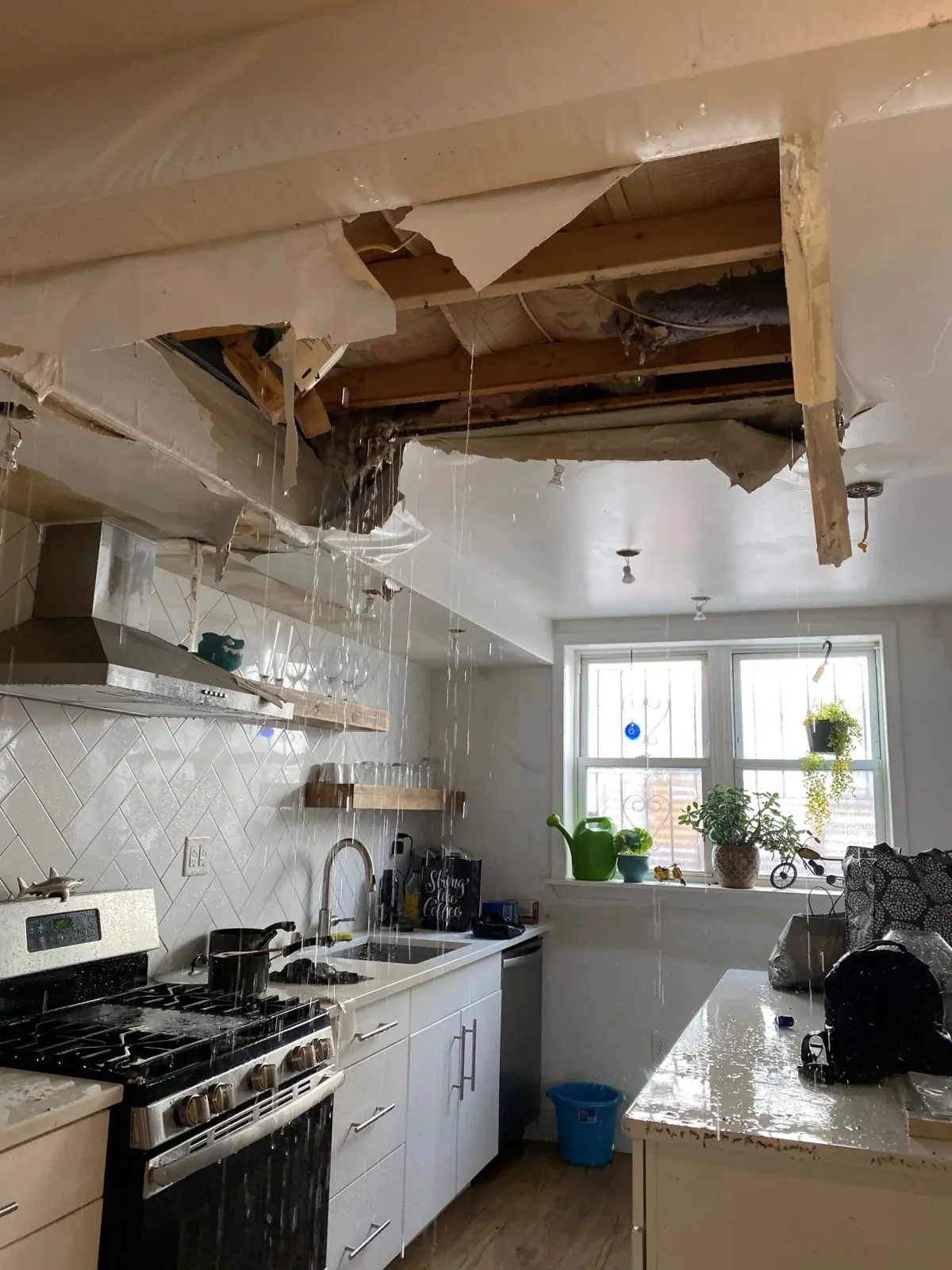
That's why a good remediation plan starts with the cause: a leaking pipe, a clogged AC drain, a roof or window leak, or materials that never dried after a past water event. Once the source is corrected, affected materials can be removed and the area dried. If your mold followed a leak, our guide on what to do in the first 24 hours after water damage explains why drying quickly matters.
Can you clean mold yourself?
For small areas, often yes. The EPA suggests that if the moldy area is less than about 10 square feet (roughly a 3-foot by 3-foot patch), you can usually handle the cleanup yourself. Hard surfaces can be scrubbed with detergent and water and dried completely. Wear gloves, eye protection, and an N-95 respirator.
Call a professional when:
- The affected area is larger than about 10 square feet.
- Mold is inside walls, in the HVAC system, or under flooring.
- The growth followed contaminated water, such as a sewage backup.
- Anyone in the home has health concerns or a weakened immune system.
- The mold keeps coming back after cleaning.
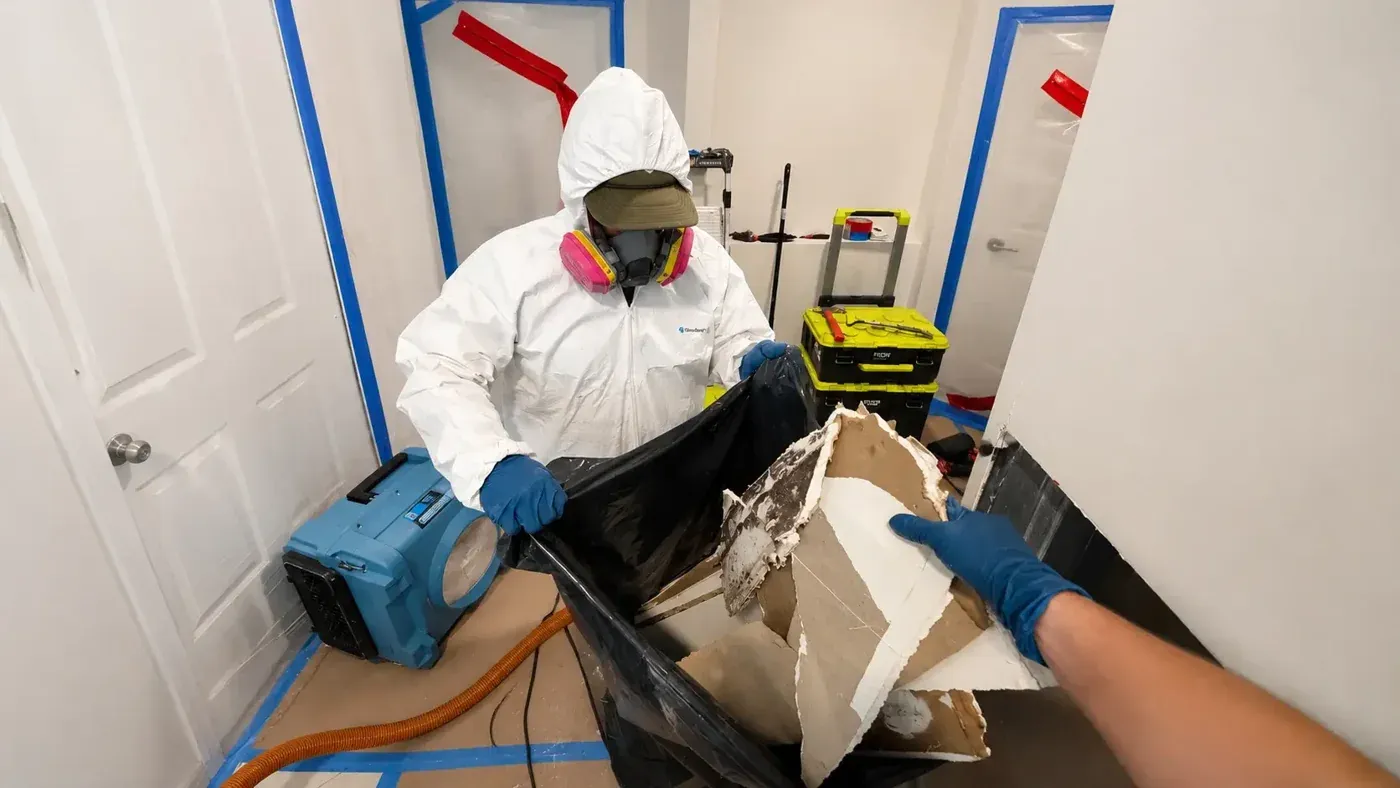
Professional mold remediation uses containment to keep spores from spreading, HEPA air filtration, removal of affected materials, and cleaning and drying of the structure.
Frequently asked questions
Do I need mold testing if I can see mold?
Usually not. The EPA states that in most cases, if visible mold growth is present, sampling is unnecessary. The mold should be removed and the moisture source corrected regardless of the species.
When is mold testing worth it?
Testing or a professional assessment can help when you smell mold but can't find it, after a significant water event, for real estate transactions, or to confirm that a remediation was successful. Sampling should be done by experienced professionals.
Is black mold more dangerous than other mold?
Color doesn't identify the species, and the CDC recommends removing all mold growth regardless of type. If you have health concerns, talk with your doctor.
Can the same company test and remediate mold in Florida?
Florida licenses mold assessors and mold remediators separately, and state law generally prohibits the same assessor or company from remediating a structure it assessed within the previous 12 months, and vice versa. Ask any company which license it holds for the work it is quoting.
What license does BO Property Services hold for mold work?
BO Property Services holds a Florida Mold Remediator license (License #MRSR4018), and our technicians are IICRC AMRT certified.
How do I prevent mold from coming back?
Fix the moisture source, dry wet materials within 24 to 48 hours, keep indoor humidity below 60 percent, and maintain your AC system, including the condensate line.
Sources and further reading
- U.S. EPA: Is sampling for mold needed? (opens in a new tab)
- U.S. EPA: A Brief Guide to Mold, Moisture, and Your Home (opens in a new tab)
- CDC: Tips on Cleaning Mold After a Flood (opens in a new tab)
- Florida Statutes §468.8419: Mold assessor and remediator prohibitions (opens in a new tab)
- Florida DBPR: Mold-Related Services (opens in a new tab)
This article is general information for homeowners, not legal, medical, or insurance advice. Follow instructions from local officials and your insurance company.