Water Damage in Boca Raton: What to Do in the First 24 Hours
The first day after a leak shapes how much of your home has to be repaired. Make the area safe, stop the water, document what happened, and get standing water out and drying started as quickly as possible. Moisture that stays inside drywall, cabinets, and subfloors is what turns a cleanup into a rebuild.
First, make sure everyone is safe
Water and electricity are a dangerous combination. Before you start moving furniture or mopping, take a minute to check the area.
- Stay out of standing water if it may be in contact with outlets, power strips, appliances, or extension cords. If you can safely reach the electrical panel from a dry location, turn off power to the affected area. If you can't, wait for a professional.
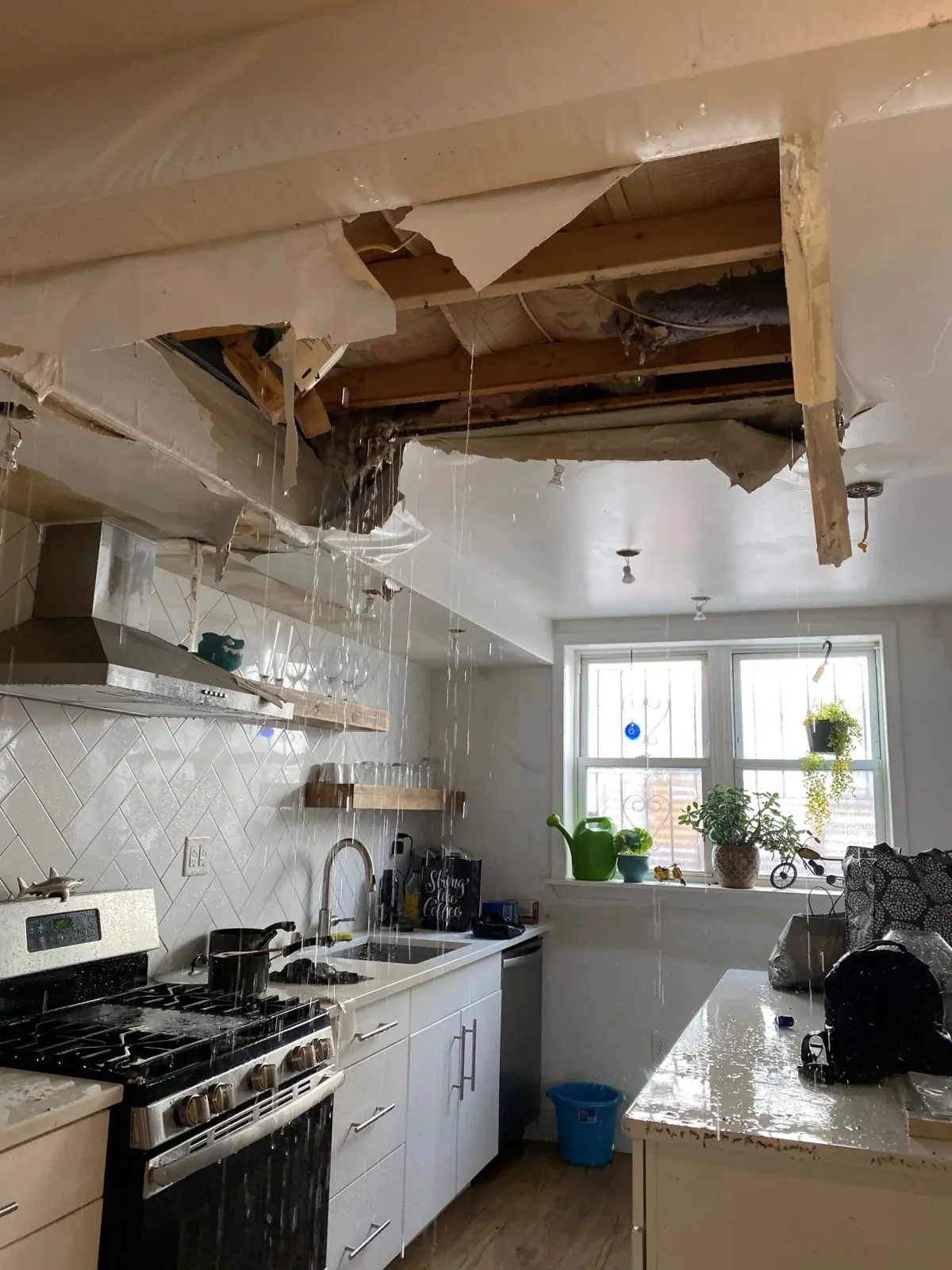
- Watch the ceiling. A sagging or bulging ceiling can hold a surprising amount of water and may come down without warning. Keep people and pets out of the room.
- Treat sewage and floodwater as contaminated. Water from a toilet overflow, a sewer backup, or outdoor flooding can carry bacteria. Avoid skin contact and keep children and pets away.
- Protect yourself with gloves and waterproof boots if you need to walk through wet areas.
Stop the source of the water
Every minute water keeps flowing, it travels farther into walls, under flooring, and into neighboring rooms or units.
Common sources in Boca Raton homes and condos
- Supply lines and valves under sinks, behind toilets, and at the refrigerator ice maker. Close the fixture shut-off valve.
- Water heaters. Close the cold-water supply valve at the top of the tank.
- Burst or leaking pipes. Close the main water shut-off for the home. In a condo, the shut-off may be in a utility closet, and building maintenance may need to isolate a riser.
- AC condensate lines and drain pans. In South Florida, air handlers run most of the year. A clogged condensate line can overflow quietly for days. Turn the system off until the drain is cleared.
- Roof, window, and door leaks after heavy rain or tropical weather. Move belongings away from the leak and contain dripping water. Roof openings may need emergency roof tarping.
If the leak is coming from a unit above you, notify building management right away. Condo water losses often involve more than one unit and the association.
Document the damage before cleanup
Good documentation makes conversations with your insurance company and contractors easier. The CDC also recommends photographing your home and belongings before you start cleaning up after water damage.
- Take wide photos of each affected room, then close-ups of damaged materials, the source of the leak, and water lines on walls or cabinets.
- Record a short video walking through the area.
- Keep damaged parts, such as a failed supply line, if it's safe to do so.
- Write down when you discovered the water and what you did to stop it.
- Contact your insurance company to report the loss and ask about next steps under your policy.
Your insurance company decides what is covered. A restoration company can document moisture readings and the drying process, which helps show what happened and what was needed.
Why water you can't see is the real problem
Mopping up the visible water is only the beginning. Drywall wicks water upward like a sponge. Water runs under baseboards and flooring, soaks into the bottom of cabinets, and collects in wall cavities. A floor can look dry on top while the subfloor or the padding underneath stays wet.
That hidden moisture is what causes the damage people notice weeks later: swollen baseboards, cupped wood floors, peeling paint, delaminating cabinets, and musty odors.
Why timing matters
The U.S. EPA advises drying water-damaged areas and items within 24 to 48 hours to prevent mold growth. In Boca Raton's warm, humid climate, materials don't dry well on their own, especially in closed-up rooms or behind cabinets. Running fans and a window AC unit is rarely enough to dry the inside of a wall.
What professional water extraction and structural drying involve
Professional water mitigation focuses on limiting the damage, not yet on rebuilding. A typical process includes:
- Inspection and moisture mapping. Moisture meters and thermal imaging help show how far the water traveled, including inside walls and under flooring.
- Water extraction. Standing water is removed from floors, carpet, and padding with extraction equipment.
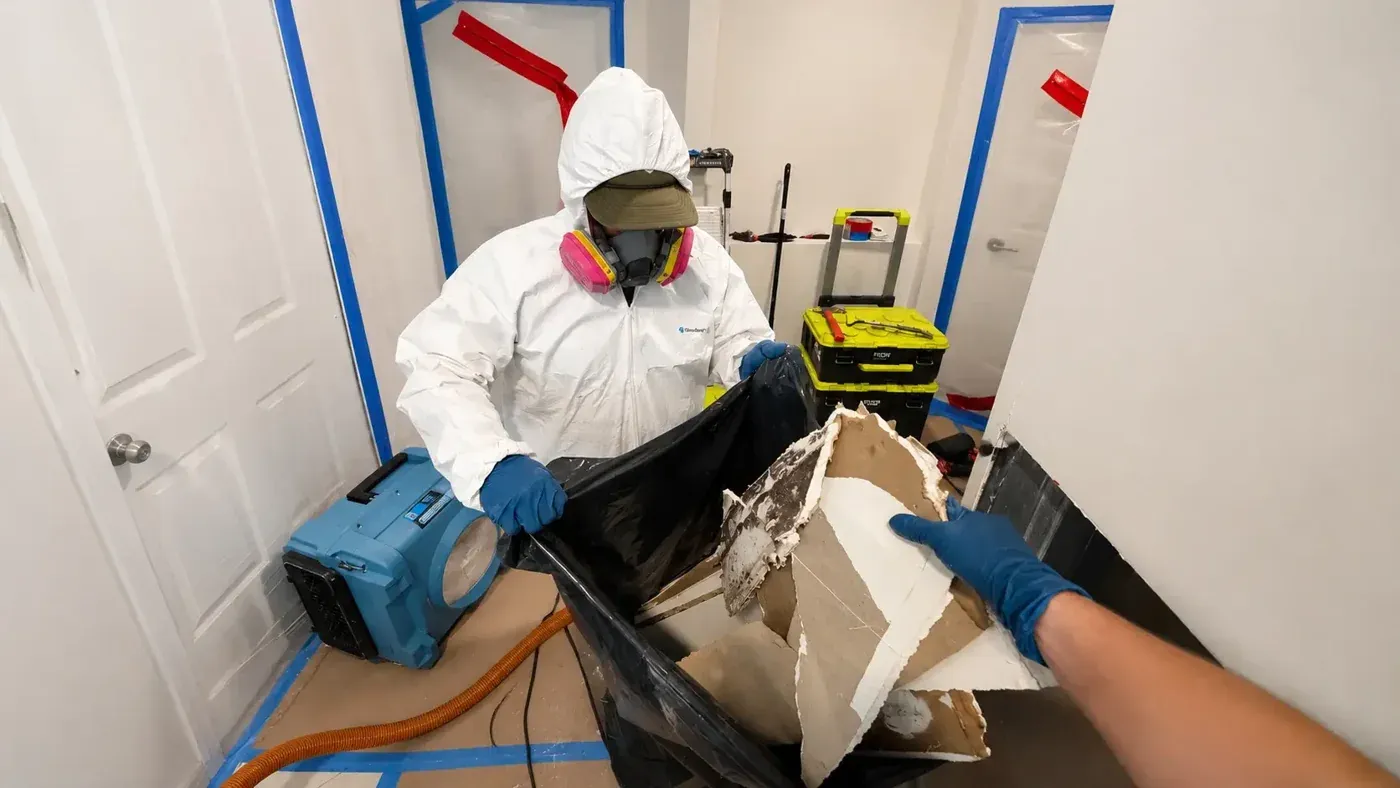
- Removing materials that can't be saved. Saturated carpet pad, baseboards, or the lower section of drywall may need to come out so the structure behind them can dry.
- Structural drying. Air movers and dehumidifiers are set up based on the affected area. The goal is to dry the structure itself, not just the air in the room.
- Monitoring until dry. Moisture readings are taken during drying so equipment isn't removed too early.
Our technicians are IICRC WRT certified (Water Damage Restoration Technician), the industry training standard for water damage work.
When drywall, flooring, or cabinets need to be removed
Not every wet material has to be replaced. Whether something can be dried in place depends on the material, how long it was wet, and the type of water involved.
- Drywall that is only damp from clean water can often be dried. Drywall that is soaked, sagging, or affected by contaminated water usually needs to be cut out.
- Carpet pad is usually discarded after significant water exposure. Carpet itself sometimes can be saved when the water was clean and drying starts quickly.
- Hardwood and laminate may cup or swell. Some wood floors respond to drying; laminate and engineered flooring often do not.
- Cabinets made of particleboard swell and lose strength when wet. Toe kicks may be removed so the space underneath can dry.
The EPA notes that porous materials that become moldy, such as ceiling tiles and carpet, may need to be thrown away. Making these decisions early, based on moisture readings, helps prevent bigger problems later.
The link between water damage and mold
Mold needs moisture and a food source, and building materials like drywall paper and wood provide the food. When materials stay wet for more than a day or two, mold can begin to grow, often where you can't see it.
Signs that moisture may have been left behind include a musty smell, spots on walls or baseboards, and paint that bubbles. If you notice these after a leak, read our guide on whether you need mold testing and learn about our mold remediation service.
From restoration to reconstruction
Once everything is dry, the work moves from mitigation to repair. Water damage restoration covers replacing drywall, baseboards, flooring, and cabinetry that had to be removed.
Larger losses may need more extensive rebuilding. Because BO Property Services has two divisions, our BO Renovation team handles reconstruction after the drying is done, so you don't need to find a second contractor to finish the job.
Frequently asked questions
How quickly should water damage be dried?
The EPA recommends drying water-damaged areas and items within 24 to 48 hours to help prevent mold growth. The sooner extraction and drying start, the more materials can usually be saved.
Can I dry water damage myself with fans?
Fans can help with small, surface-level spills of clean water. When water has soaked into drywall, under flooring, or into cabinets, fans alone often can't dry the structure. Moisture meters are the way to confirm materials are actually dry.
Will my homeowners insurance cover water damage?
It depends on your policy and the cause of the damage. Sudden events such as a burst pipe are treated differently from long-term leaks. Contact your insurance company to report the loss. They make all coverage decisions, and good documentation helps the process.
Does all wet drywall need to be replaced?
No. Drywall that is only damp from clean water can often be dried in place. Drywall that is saturated, sagging, or exposed to contaminated water usually needs to be removed.
Do you work in condos?
Yes. We work in Boca Raton condominiums and multi-unit buildings, where a leak can affect several units. We can coordinate with property managers and building maintenance.
Sources and further reading
- U.S. EPA: A Brief Guide to Mold, Moisture, and Your Home (opens in a new tab)
- CDC: Tips on Cleaning Mold After a Flood (opens in a new tab)
- U.S. EPA: Homeowner's and Renter's Guide to Mold Cleanup After Disasters (opens in a new tab)
This article is general information for homeowners, not legal, medical, or insurance advice. Follow instructions from local officials and your insurance company.